
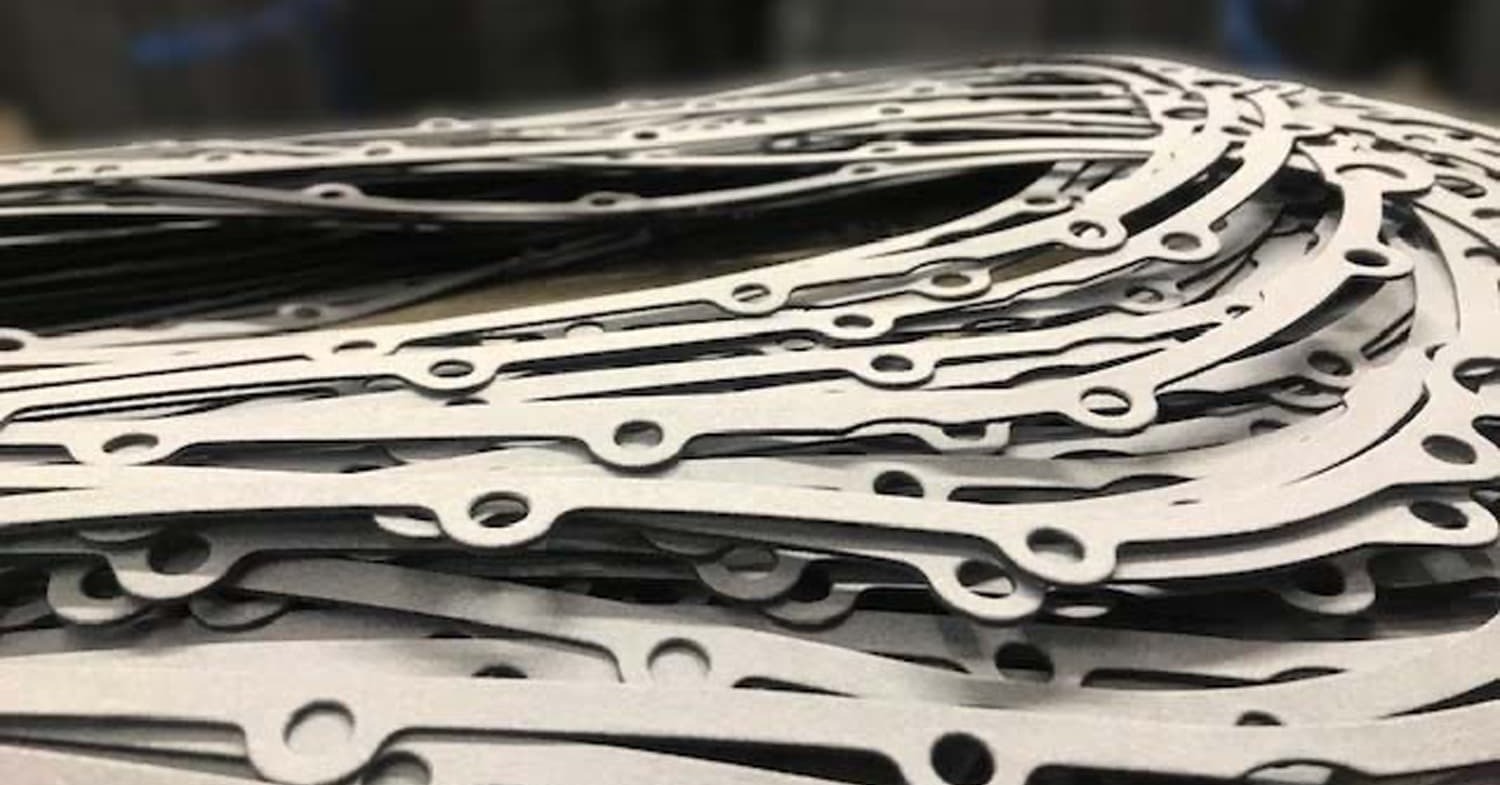
How to Avoid Design Mistakes in Die-Cut Gaskets, Cushioning and Seals
A finished die-cut component might look simple, but the process from design to production can be anything but.
For OEMs designing custom sealing solutions, gaskets, cushioning, insulation and other flexible material components, it's important to consider more than just the final shape of your part. Material properties, tolerances, installation requirements and production efficiency all play a role in creating a successful component.
Avoiding these five common mistakes can help engineers and purchasing teams reduce costs, prevent production issues and get better results from their custom die-cutting projects.
1. Choosing the Wrong Material for the Application
Material selection is absolutely critical for the success of your part. One of the most common mistakes in designing die-cut parts is selecting a material based on familiarity or cost without fully considering how the component will function.
Before selecting a material, consider:
- Function: Does the component need to create a seal, absorb vibration, provide cushioning or offer thermal or acoustic insulation?
- Environmental exposure: Will it encounter chemicals, oils, water, UV exposure or extreme temperatures?
- Physical properties: How much flexibility, compression or resistance to wear does the application require?
- Thickness: Will the selected thickness provide the required performance while remaining practical to die cut?
Different materials offer different levels of flexibility, compressibility, durability and resistance to environmental conditions. A material that works well for cushioning or vibration control, for example, may not provide the sealing performance or thermal resistance needed for another application. Selecting a material that meets the application's performance requirements from the start can help prevent premature wear, sealing failures or the need for redesign.
Related Content: Best Materials to Use for Die-Cut Gaskets
2. Designing Features That Are Too Small or Complex
Die cutting can produce precise, repeatable shapes, but not every design feature is equally practical to manufacture.
Small holes, narrow sections, closely spaced cutouts and intricate geometries can create challenges during cutting and material handling. Depending on the material and its thickness, these features may be difficult to produce consistently or could weaken the finished component.
For example, a gasket with a very narrow section between two cutouts may be more likely to tear during handling or installation. Thin sections in foam cushioning or insulation components may also be more susceptible to damage, particularly when the material is soft or compressible.
Adjustments such as increasing the spacing between cutouts, widening narrow sections or adding radii to sharp internal corners can improve part durability and make production more consistent without changing the component's intended function. A DFM review can help you uncover opportunities in the design to improve manufacturability.
3. Specifying Unnecessarily Tight Tolerances
Precision matters in die cutting. However, specifying tighter tolerances than the application requires can increase manufacturing complexity and cost. Unlike rigid materials, flexible materials such as rubber, foam and certain plastics can stretch, compress or change shape slightly during cutting, handling and measurement.
This means a tolerance that is practical for a rigid component may not be appropriate for a flexible die-cut part.
Rather than applying the tightest possible tolerance to every dimension, identify which features directly affect the component's performance.
For example:
- Critical dimensions: Mounting holes that must align with fasteners, gasket openings that must match sealing surfaces or insulation components that need to fit within a defined space.
- Less critical dimensions: Exterior edges of cushioning pads or other features where slight dimensional variation won't affect fit or function.
Clearly identifying critical dimensions on the part drawing helps manufacturers understand where precision matters most and where reasonable variation is acceptable.
4. Overlooking How the Part Will Be Installed or Used
A die-cut component can meet every dimensional requirement on a drawing and still fail to perform as expected once it's installed. That's because the finished part rarely functions on its own. It's one component within a larger assembly, where surrounding materials, installation methods and operating conditions can affect performance.
Different applications introduce different considerations:
- Gaskets and sealing solutions: How will the component compress between mating surfaces, and will it maintain an effective barrier against water, dust or other contaminants?
- Cushioning and vibration-control components: What loads, movement or repeated compression will the part experience?
- Insulation components: Will the material provide the required thermal or acoustic performance once installed, and are there gaps or contact points that could affect its effectiveness?
Installation requirements matter, too. Consider whether the part needs to be positioned precisely, installed in a confined space or held in place during assembly.
Related Content: Pressure-Sensitive Adhesive Selection Guide
5. Overlooking How Part Design Affects Production Efficiency
Even when a component performs as intended, its design can affect how efficiently it's produced. For example, irregular shapes or dimensions may limit how many gaskets, cushioning pads or insulation components fit on a sheet or roll of material, increasing scrap. Small adjustments to the part's geometry can sometimes improve material utilization without affecting performance.
Other factors to consider include production consistency, volume, and required secondary operations (such as adhesives or laminating).
In some cases, a different manufacturing approach may offer a better balance of cost, flexibility and production requirements. For example, dieless knife cutting may be worth evaluating for certain designs or production quantities.
Get Design Feedback Before Moving Into Production
Seemingly small design decisions can have a lasting impact on the performance and cost of die-cut components. Identifying potential challenges before production begins can help reduce revisions, material waste and manufacturing delays.
At Industrial Custom Products (ICP), we help OEMs evaluate part designs, select materials and determine the most practical manufacturing approach. Whether you're developing custom gaskets, sealing solutions, cushioning, insulation or other flexible material components, our die cutting, dieless knife cutting, laminating and additional fabrication capabilities allow us to support a range of project requirements.
Have a custom die-cut component in development? We’d love to take a look at your design, production, and requirements to ensure the best possible outcome.
Industrial Custom Products is a one-stop-shop for custom manufacturing and plastic fabrication, including: prototyping and product development, die cutting and dieless knife cutting, thermoforming and vacuum forming, large part thermoforming, CNC plastic routing, fabrication and assembly and drape forming.