---
title: "EPDM vs Neoprene Rubber: Key Differences for Gasket Applications"
description: EPDM is lower cost and more noise-resistant, while Neoprene is more resistant to chemicals and has better thermal insulation.
image: https://industrialcustom.com/hubfs/Imported_Blog_Media/shutterstock_191582333.jpg
---
[Skip to main content](https://industrialcustom.com/blogs/whats-the-difference-between-epdm-and-neoprene-rubber#main)
[EMAIL US](mailto:icp@industrialcustom.com) | [612-781-2255](tel:6127812255) | [TOLL FREE: 877-784-2415](tel:8777842415)
[   ](https://industrialcustom.com)
[Request a Quote](https://industrialcustom.com/request-a-quote)
[Contact Us](https://industrialcustom.com/contact-us)
- [Home](https://industrialcustom.com)
- [About](https://industrialcustom.com/about-us)
- Show submenu for Capabilities Capabilities
- [Design for Manufacturability Review](https://industrialcustom.com/dfm-review)
- [Rapid Prototyping](https://industrialcustom.com/rapid-prototyping)
- [Innovative Thermoforming & Vacuum Forming](https://industrialcustom.com/thermo-and-vacuum-forming)
- [Large Part Thermoforming](https://industrialcustom.com/thermoforming)
- [Die Cutting](https://industrialcustom.com/die-cutting)
- [Flash Cutting](https://industrialcustom.com/dieless-knife-cutting)
- [Custom Plastic Fabrication](https://industrialcustom.com/custom-plastic-fabrication)
- [CNC Plastic Routing](https://industrialcustom.com/plastic-routing)
- Show submenu for Industries Industries
- [Powersports & Marine OEMs](https://industrialcustom.com/powersports-marine-recreational)
- [Agriculture & Heavy Truck OEMs](https://industrialcustom.com/agriculture-heavy-truck)
- [Industrial OEMs](https://industrialcustom.com/industrial)
- [Medical OEMs](https://industrialcustom.com/medical)
- [All Industries Served](https://industrialcustom.com/industries-served)
- [Materials](https://industrialcustom.com/materials-page)
- [Quality](https://industrialcustom.com/icp-quality)
- [Videos](https://industrialcustom.com/videos)
- Show submenu for What We Do What We Do
- [Portfolio](https://industrialcustom.com/portfolio)
- [Case Studies](https://industrialcustom.com/case-studies)
- [Blogs](https://industrialcustom.com/blogs)
Open main navigation
Close main navigation
- [Home](https://industrialcustom.com)
- [About](https://industrialcustom.com/about-us)
- Show submenu for Capabilities Capabilities
- Capabilities
- [Design for Manufacturability Review](https://industrialcustom.com/dfm-review)
- [Rapid Prototyping](https://industrialcustom.com/rapid-prototyping)
- [Innovative Thermoforming & Vacuum Forming](https://industrialcustom.com/thermo-and-vacuum-forming)
- [Large Part Thermoforming](https://industrialcustom.com/thermoforming)
- [Die Cutting](https://industrialcustom.com/die-cutting)
- [Flash Cutting](https://industrialcustom.com/dieless-knife-cutting)
- [Custom Plastic Fabrication](https://industrialcustom.com/custom-plastic-fabrication)
- [CNC Plastic Routing](https://industrialcustom.com/plastic-routing)
- Show submenu for Industries Industries
- Industries
- [Powersports & Marine OEMs](https://industrialcustom.com/powersports-marine-recreational)
- [Agriculture & Heavy Truck OEMs](https://industrialcustom.com/agriculture-heavy-truck)
- [Industrial OEMs](https://industrialcustom.com/industrial)
- [Medical OEMs](https://industrialcustom.com/medical)
- [All Industries Served](https://industrialcustom.com/industries-served)
- [Materials](https://industrialcustom.com/materials-page)
- [Quality](https://industrialcustom.com/icp-quality)
- [Videos](https://industrialcustom.com/videos)
- Show submenu for What We Do What We Do
- What We Do
- [Portfolio](https://industrialcustom.com/portfolio)
- [Case Studies](https://industrialcustom.com/case-studies)
- [Blogs](https://industrialcustom.com/blogs)
- [Request a Quote](https://industrialcustom.com/request-a-quote)
[Contact Us](https://industrialcustom.com/contact-us)
# What’s the Difference Between EPDM and Neoprene Rubber?
April 10, 2026
Synthetic rubbers come in many forms. Two of the most common for the automotive, HVAC and roofing industries are Ethylene Propylene Diene Monomer (EPDM) and Neoprene. Both types of rubbers have many uses, but what is the difference between them?
## What Is EPDM Rubber?
EPDM stands for ethylene propylene diene monomer, a synthetic rubber designed for strong resistance to environmental conditions.
EPDM is widely used in applications that experience exposure to:
- UV light
- Ozone
- Water and steam
- Temperature changes
- Outdoor weather
Because of this durability, EPDM is commonly used for outdoor seals and gaskets. It maintains flexibility over long periods of time and performs well in environments where other rubber materials may crack or degrade.
Related Content: [EPDM Rubber for Fabricated Parts: What You Need to Know](https://industrialcustom.com/blogs/epdm-rubber-for-fabricated-parts-what-you-need-to-know)
## What Is Neoprene Rubber?
Neoprene is a synthetic rubber known for its chemical and oil resistance.
It is frequently used in industrial environments where materials may come into contact with oils, fuels, or certain chemicals.
Neoprene offers strong performance in applications that require:
- Oil resistance
- Moderate chemical resistance
- Flame resistance
- Durability in industrial settings
Because of these properties, neoprene is commonly used for industrial gaskets, refrigeration components, and mechanical seals.
## EPDM vs Neoprene Rubber: Quick Comparison
EPDM and neoprene are two of the most common rubber materials used for seals and die-cut gaskets. Both offer strong durability and flexibility, but they perform differently depending on the environment.
| Property | EPDM Rubber | Neoprene Rubber |
| --- | --- | --- |
| Weather / UV Resistance | Excellent | Good |
| Oil Resistance | Poor | Good |
| Chemical Resistance | Moderate | Strong |
| Temperature Range | Excellent | Good |
| Typical Uses | Outdoor seals, HVAC gaskets | Industrial gaskets, oil-exposed parts |
In simple terms, EPDM performs best outdoors, while neoprene performs better around oils and chemicals.
## EPDM vs Neoprene for Die-Cut Gaskets
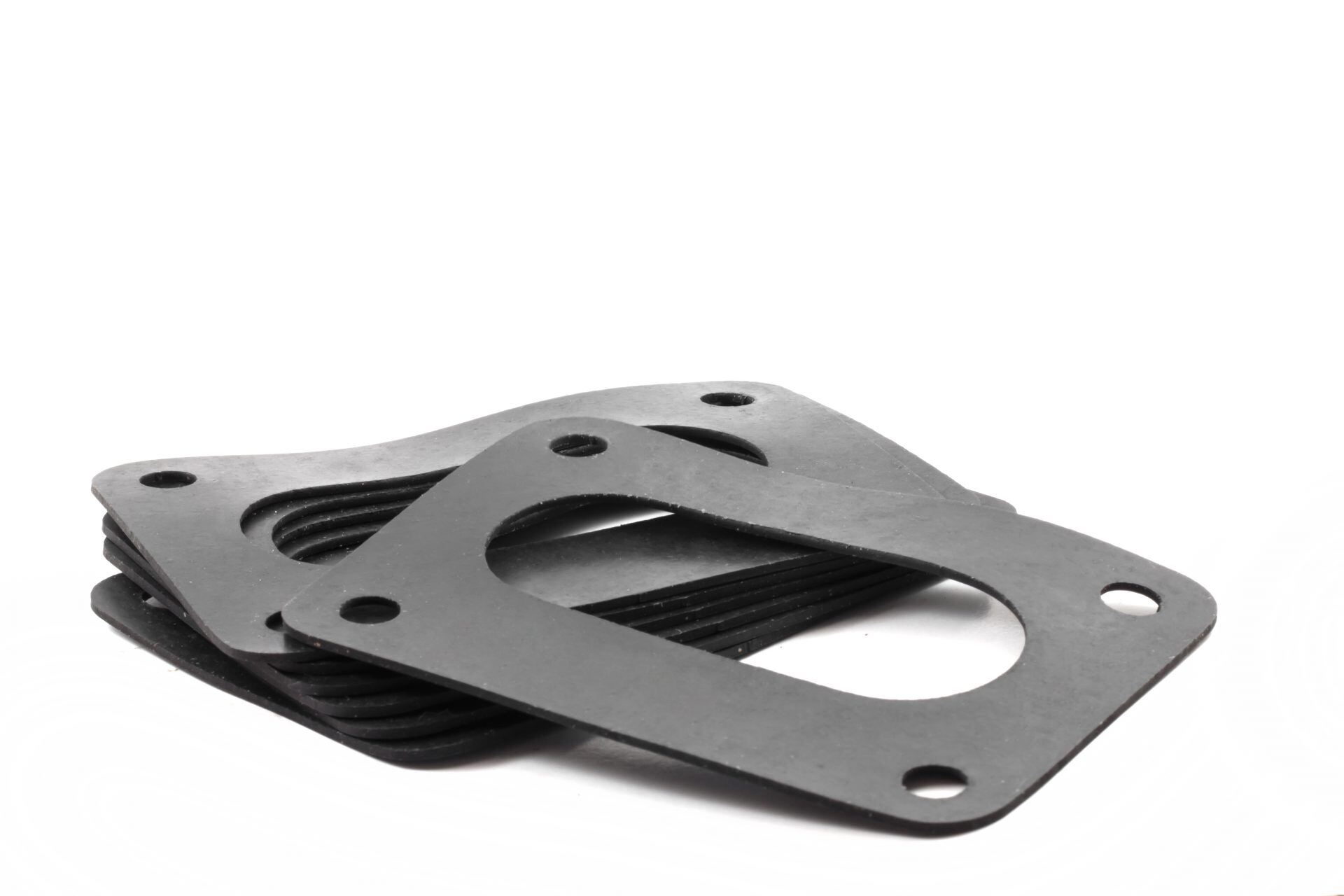
Both EPDM and neoprene are commonly used for [die-cut gaskets and seals](https://industrialcustom.com/die-cutting) because they compress easily and create reliable seals between surfaces.
EPDM gaskets are frequently used in applications such as:
- HVAC sealing systems
- Electrical enclosures
- Outdoor equipment
- Weather-exposed parts
Neoprene gaskets are often used in:
- Industrial equipment
- Mechanical applications
- Refrigeration systems
Because die-cut gaskets are often thin and precisely shaped, material flexibility and compression performance are important factors in selecting the right rubber.
Related Content: [Best Materials to Use for Die-Cut Gaskets](https://industrialcustom.com/blogs/best-materials-to-use-for-die-cut-gaskets)
## Need Help Selecting the Right Rubber Material for Your Application?
Both EPDM and neoprene are durable elastomers, but each material performs best in different environments. If you're designing a gasket or sealing component and are unsure which material is best, ICP can help.
Industrial Custom Products manufactures custom die-cut rubber gaskets and sealing components for a wide range of applications. Our team can help evaluate your design and recommend the best material based on your operating environment and performance requirements.
Request a quote to determine the best rubber material for your gasket application.
[Request a Quote](https://industrialcustom.com/request-a-quote)
---
*Industrial Custom Products is a one-stop-shop for custom manufacturing and plastic fabrication, including: prototyping and product development, die cutting and dieless knife cutting, thermoforming and vacuum forming, large part thermoforming, CNC plastic routing, fabrication and assembly and drape forming.*
**Tags:**
[Blogs](https://industrialcustom.com/blogs/tag/blogs)
### Reputation Built on Quality and Experience
**HAVE A QUESTION ? WE ARE HERE FOR YOU.**
**[2801 37TH AVENUE N.E. MINNEAPOLIS MN 55421-4217](https://goo.gl/maps/tVLhPhVqv58WjtT87)**
**TEL : [612-781-2255](tel:6127812255)**
**FAX : 612-781-1144**
**TOLL FREE : [877-784-2415](tel:8777842415)**
**EMAIL : [ICP@INDUSTRIALCUSTOM.COM](mailto:icp@industrialcustom.com)**
[](https://industrialcustom.com)
- [Custom Plastic Fabrication](https://industrialcustom.com/custom-plastic-fabrication)
- [Die Cutting](https://industrialcustom.com/die-cutting)
- [Thermoforming & Vacuum Forming](https://industrialcustom.com/thermo-and-vacuum-forming)
- [Design for Manufacturability Review](https://industrialcustom.com/dfm-review)
-
-
-
Copyright © 2026 Industrial Custom Products | All Rights Reserved | [Privacy Policy](http://45684422.hs-sites.com/privacy-policy) | [Terms of Use](http://45684422.hs-sites.com/terms-and-conditions) | Minneapolis Web Design by BizzyWeb
[](https://industrialcustom.com/hubfs/Documents%20and%20Certifications/ICP-1919US-24-25.pdf) 
```json
{
"@context" : "https://schema.org",
"@type" : "BlogPosting",
"author" : {
"@type" : "Person",
"name" : "Adam Lunde",
"url" : "https://industrialcustom.com/blogs/author/adam-lunde"
},
"dateModified" : "2026-04-10T17:08:42.311Z",
"datePublished" : "2026-04-10T17:08:42.000Z",
"headline" : "EPDM vs Neoprene Rubber: Key Differences for Gasket Applications",
"image" : [ "https://industrialcustom.com/hubfs/Imported_Blog_Media/shutterstock_191582333.jpg" ],
"mainEntityOfPage" : {
"@id" : "https://industrialcustom.com/blogs/whats-the-difference-between-epdm-and-neoprene-rubber",
"@type" : "WebPage"
},
"publisher" : {
"@type" : "Organization",
"logo" : {
"@type" : "ImageObject",
"url" : "https://industrialcustom.com/hubfs/icp-logo-trans.png"
}
}
}
```